A small island in the Baltic Sea has no native land mammals, yet scientists have found wolf remains there that are roughly 3,000 to 5,000 years old. Because wolves cannot cross open water on their own, researchers think prehistoric people brought them by boat.
The remains turned up in Stora Förvar cave on Stora Karlsö, a Swedish island of just 2.5 square kilometers. The cave was heavily used by seal hunters and fishers during the Neolithic and Bronze Ages. A team from the Francis Crick Institute, Stockholm University, the University of Aberdeen and the University of East Anglia published the findings in the journal Proceedings of the National Academy of Sciences.
Wolves on an island they could not reach alone
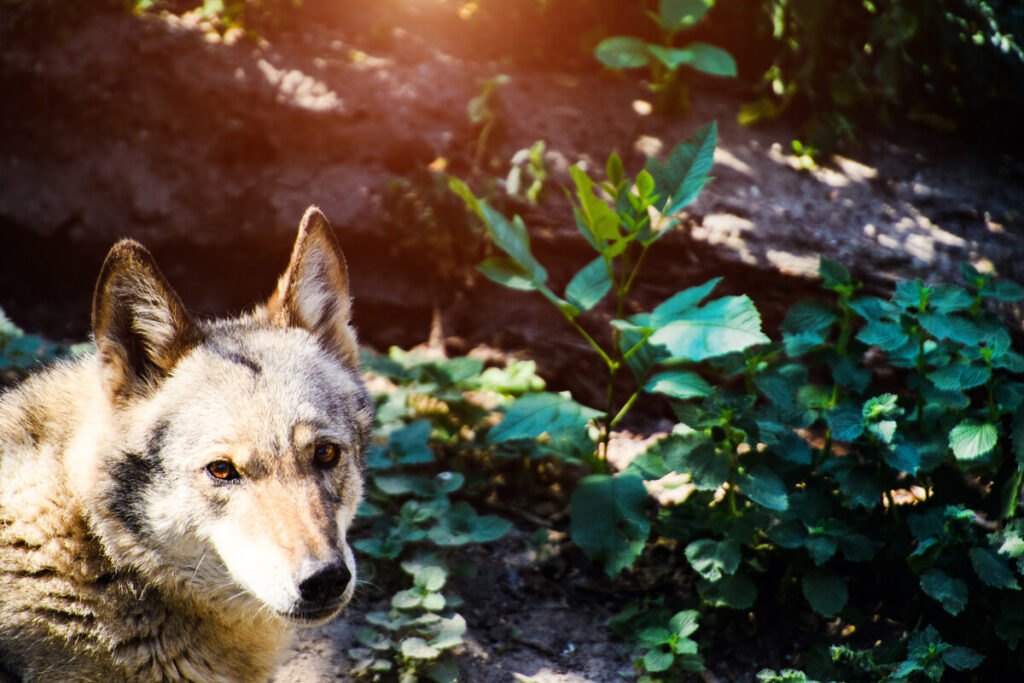
The scientists studied two canids, a group that includes wolves, dogs and foxes. Genetic tests showed that both animals were wolves, with no sign of dog ancestry. That was a surprise, because the animals did not look like wild wolves in other ways.
Chemical analysis of the bones, known as isotope analysis, can show what an animal ate during its life. These wolves had eaten a lot of marine protein, including seals and fish. That closely matched the diet of the people living on the island, which suggests the wolves were probably being fed by humans.
The wolves were also smaller than typical mainland wolves. One of them had unusually low genetic diversity, lower than any other ancient wolf the team had seen. Low diversity is common in isolated groups and in animals that are bred or managed by people, although the researchers say they cannot rule out a natural cause.
Dr. Linus Girdland-Flink of the University of Aberdeen, a lead author of the study, said: “The discovery of these wolves on a remote island is completely unexpected.” He added that the animals “seemed to be living alongside humans, eating their food, and in a place they could have only have reached by boat.”
A wolf that survived a serious injury
One Bronze Age wolf had severe damage to a limb bone. An injury like that would likely have made it hard to move and hunt, yet the animal lived long enough for the damage to leave a clear mark on its skeleton. The researchers suggest it may have been cared for, or may have lived in a setting where it did not need to hunt large prey to survive.
What this means for the story of dogs
For a long time, scientists have viewed the human and wolf relationship mainly through dog domestication, in which wolves slowly turned into dogs while living near people. These island wolves do not fit neatly into that story. The team cannot yet say whether the animals were tame, kept in captivity or managed in some other way. Their presence on an inhabited island does, however, point to an intentional and ongoing relationship.
Pontus Skoglund of the Ancient Genomics Laboratory at the Francis Crick Institute, the senior author, said: “It was a complete surprise to see that it was a wolf and not a dog.” He called it “a provocative case that raises the possibility that in certain environments, humans were able to keep wolves in their settlements, and found value in doing so.”
Anders Bergström of the University of East Anglia, a co-lead author, noted that the low genetic diversity “suggests that humans were interacting with and managing wolves in ways we hadn’t previously considered.”
The study combined the study of bones with advanced genetic analysis, and each method added something the other could not. Jan Storå, Professor of Osteoarchaeology at Stockholm University, said the combined data revealed “new and very unexpected perspectives on Stone Age and Bronze Age human-animal interactions.”
Taken together, the work suggests that early communities had more varied relationships with wolves than scientists once believed. Some may have managed and cared for wolves without fully domesticating them, a forgotten chapter that hints at experiments in coexistence that never produced the dogs we know today.
Source: ScienceDaily