Off the coast of Costa Rica, scientists have found a bright yellow, tree-shaped coral that does not fit into any known coral family. Its genes and body structure were so unusual that the team had to create an entirely new family to place it.
A golden forest on the deep seafloor
The coral grows on underwater mountains, called seamounts, in the Pacific Ocean. Researchers found it between 360 and 529 meters below the surface. Its branches spread out like a small tree, and some colonies grow more than a meter tall.
The team collected specimens with a remotely operated vehicle named SuBastian. The dives took place during expeditions in 2019 and 2023, aboard the research vessels Falkor and Falkor (too), which are run by the Schmidt Ocean Institute. The explorers worked on seamounts near Isla del Coco and along Costa Rica’s Pacific margin.
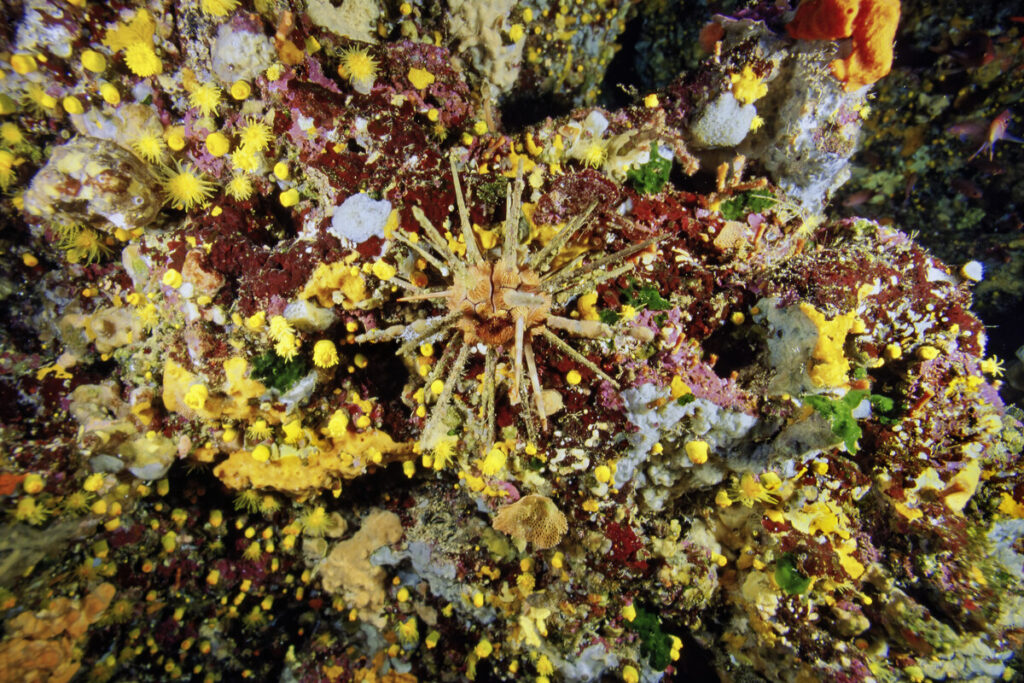
The coral was especially common on rocky outcrops, where brittle stars covered nearly every bit of open surface. Against that glittering background, the yellow branches looked like glowing trees rising from the seafloor.
A name borrowed from Middle-earth
That scene gave the coral its scientific name. The new genus is called Laurinque, from “Laurinquë,” which means “golden tree” in Quenya, the Elvish language Tolkien invented for The Lord of the Rings and The Silmarillion. The species name, elenya, means “stellar” or “of the stars” in the same language, a nod to the brittle stars that crowd around the colonies.
Together, the two names capture what the researchers described as an almost mystical, elvish landscape on the deep ocean floor.
Three genes, three different answers
Figuring out where the coral belongs turned out to be far harder than expected. The scientists first sequenced three genes that are commonly used to identify and sort corals. Instead of agreeing, each gene pointed to a different, unrelated family.
Because the results were so inconsistent, the team switched to a method called phylogenomics, which compares hundreds of genes at the same time. That wider analysis finally settled the question.
The coral does not belong to any family scientists had already described. It forms its own lineage, most closely related to a group called Eunicellidae, but its genetics and anatomy differ enough to justify a new family, which the researchers named Laurinqueidae.
From a garden to a new family
Dr. Odalisca Breedy of the Universidad de Costa Rica led the study. She first saw the coral garden in 2019 and remembers being struck by it.
“I saw the octocoral garden for the first time in 2019 and I was impressed by the beauty of the landscape, which inspired, later the elvish name of the taxa. I thought the species could belong to a known family and genera, but after the preliminar morphological analysis I realised that it was something very different that I could not match with the known taxa.”
After more samples were collected in 2023, molecular work by her colleagues Cathy McFadden, Catalina Murillo and Andrea Quattrini helped pin down the coral’s place in the family tree. The findings are reported in the open-access journal ZooKeys.
Why it matters
This find joins a growing list of species never documented before on Costa Rica’s seamounts. It also shows how much of the deep ocean is still poorly known, even though it covers roughly two-thirds of Earth’s surface.
Coral gardens like this one are considered vulnerable marine ecosystems. Their complex, three-dimensional shapes give shelter to many other kinds of deep-sea life, which makes them important centers of biodiversity in places that scientists are only beginning to understand.
Support for the research came from the Schmidt Ocean Institute and a National Geographic Society research grant.
Source: ScienceDaily