Pumas have slowly returned to the coast of southern Argentina, and there they ran into a prey animal they had never hunted in modern times: the Magellanic penguin. A new study estimates that pumas killed more than 7,000 adult penguins in just four years at a single colony, and many of those birds were never eaten.
The story unfolds in Monte Leon National Park, on the Patagonian coast. It raises a tricky question for conservation. What should happen when protecting one animal ends up hurting another, in a landscape that is still healing from decades of human use?
A big cat comes home
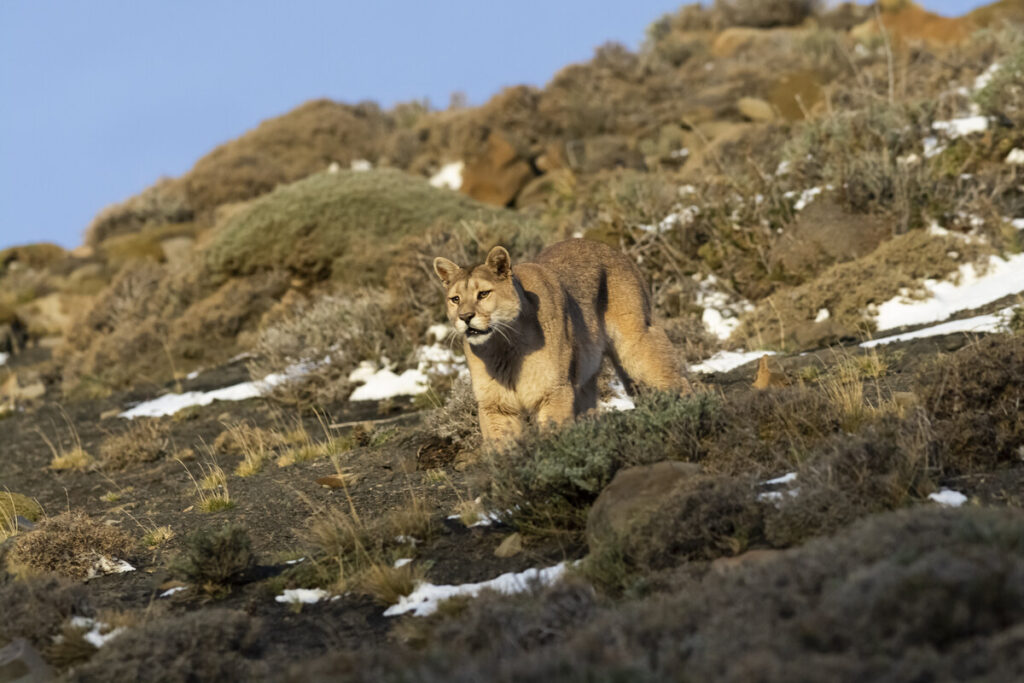
For a long time, much of southern Argentina was cattle country. When ranching there came to an end in 1990, pumas (Puma concolor) began to move back, little by little, into parts of the range they once roamed. That comeback is a conservation win on its own. It also brought the cats face to face with Magellanic penguins (Spheniscus magellanicus), something that had never happened in modern history.
Penguins with no fear of land hunters
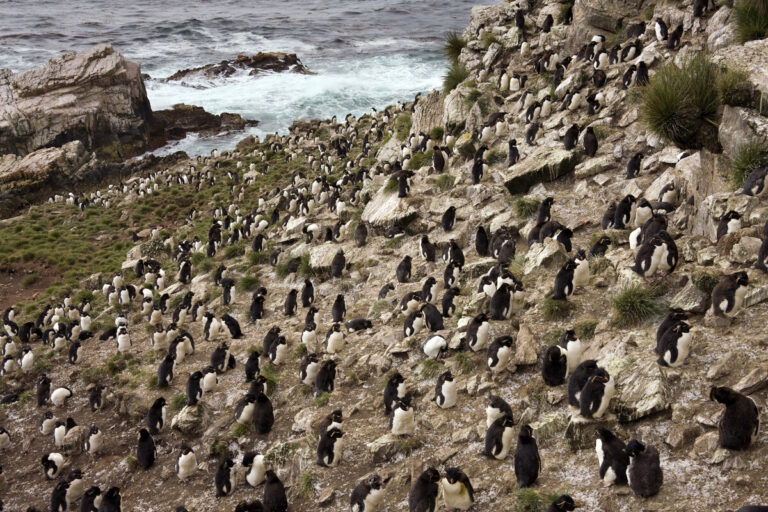
The timing matters. While pumas were scarce, the penguins had shifted their nests from islands off the coast to the mainland. With no large land predators around, the mainland was a safe and handy place to raise chicks.
That safety did not last. Penguins have very few ways to protect themselves from a large carnivore, so once pumas showed up, the birds were easy targets. What scientists did not know was whether these attacks were heavy enough to shrink the colony over time.
Counting the losses
Researchers have kept a close watch on the penguin colonies of Monte Leon since the park was created in 2004. A team from the Centro de Investigaciones de Puerto Deseado, part of the Universidad Nacional de la Patagonia Austral, worked with park rangers to log penguin carcasses tied to puma attacks between 2007 and 2010.
For the new analysis, that team joined forces with the Wildlife Conservation Research Unit at Oxford University, known as WildCRU. Working from the carcass counts, they estimated that more than 7,000 adult penguins were killed over those four years. That is roughly 7.6% of the colony’s adults, out of a population of about 93,000 birds.
Killing more than they eat
One detail stood out right away. Many of the dead penguins had been only partly eaten, and many had not been eaten at all. That pattern tells scientists the pumas were not hunting just to fill their stomachs.
Melisa Lera, a postgraduate student at WildCRU and the lead author of the study, described the number of carcasses as “overwhelming.” She said the uneaten birds point to a behavior ecologists call surplus killing, and she compared it to something many pet owners will recognize: “It is comparable to what is seen in domestic cats when prey are abundant and/or vulnerable: ease of capture can lead to cats hunting more birds, even when they do not end up actually eating them.”
In other words, a colony packed with birds that can neither outrun nor fight off a big cat offers the kind of easy prey that can push a predator to kill far beyond its needs.
Why the colony is not likely to vanish
Lera explained that the team needed to know whether this behavior could threaten the colony’s long-term survival. To find out, the researchers fed their data into population models.
The answer was reassuring, at least for now. Puma attacks alone were unlikely to wipe out the Monte Leon colony. Two other factors carried far more weight: how successfully the penguins breed, and how many young penguins live long enough to become adults.
The models showed the colony disappearing only in hypothetical worst cases. Those scenarios combined very poor survival among young penguins with extremely weak breeding, limited to one chick per pair at most. Even then, heavy puma predation made things worse, but it was not the main cause.
What this means for penguins and other coastal wildlife
Because breeding and the survival of young birds matter so much, the researchers say it is important to learn how environmental conditions shape penguin reproduction. Food supply, nutrient availability and temperature may all strongly influence the colony’s future, and climate change is known to affect each of them.
Study co-author Dr. Jorgelina Marino, also of WildCRU, sees a wider lesson. “This study captures an emerging conservation challenge, where recovering carnivores are encountering novel prey,” she said. “Understanding how these dietary shifts affect both predators and prey is essential to inform conservation.”
Patagonia is not the only place where this is playing out. As land predators move into coastal habitats, seabirds that nest on the mainland and other shoreline animals may face growing risks. Two examples come from North America. On the coast of Georgia, non-native feral hogs have become major predators of loggerhead sea turtle eggs. In eastern North America, coyotes are spreading onto coastal barrier islands and changing those ecosystems.
The authors stress that ongoing monitoring is the best way to catch early signs of decline before serious damage is done. In Monte Leon, park authorities are still tracking both the pumas and the penguins as this new relationship between predator and prey plays out.
Source: ScienceDaily