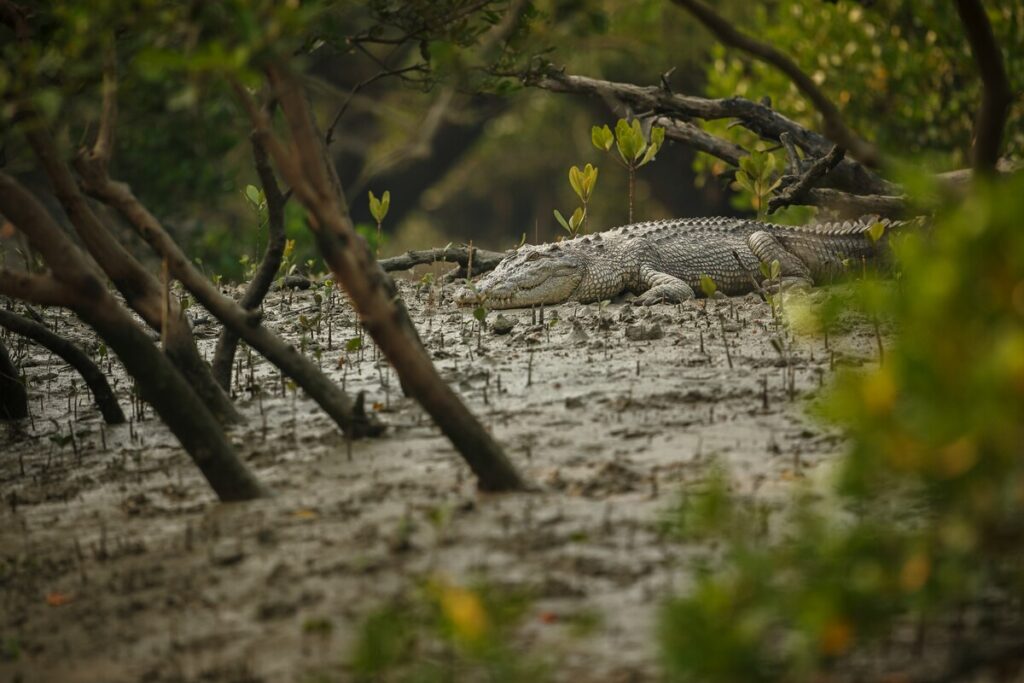
Crocodiles have a reputation for always finding their way back to where they were caught. But when scientists released three captive-raised saltwater crocodiles into the mangroves of Bangladesh, none of them tried to head back to the facility where they grew up. That surprise could give a struggling crocodile population a new lifeline.
A predator with a built-in compass
Lots of animals know how to get home. Some make quick trips between a nest or burrow and their feeding spots every day. Others travel enormous distances over many weeks before returning. Being able to find home again often helps an animal survive and raise young.
Crocodiles are especially famous for it. Move one away from its territory, and there is a good chance it will make its way right back. That habit is a real headache for wildlife managers, because it can undo the work of relocating a crocodile somewhere new.
Ru Somaweera, a behavioral ecologist and adjunct associate professor at Murdoch University, explained the open question behind the new study: “What we still don’t fully understand, though, is how this behavior plays out in individuals that have been bred or kept in captivity for long periods before being released back into the wild.”
A small population in a big mangrove forest
The research took place in the Sundarbans, a vast mangrove forest in Bangladesh. It is one of the last strongholds for saltwater crocodiles in the country.
For decades, hunters killed these reptiles for their skins, and by the 1970s the species had been badly depleted in Bangladesh. The crocodiles have been protected by law there since 1973, yet their numbers have not shown any clear rebound. Most of the crocodiles still known in Bangladesh live in the Sundarbans, and the most recent survey estimated only 140 adult crocodiles there.
That is why the homing question matters so much. If captive-bred crocodiles simply return to their pens after release, any plan to rebuild the wild population with them would fall apart.
Why not just release babies
Conservation programs have usually released hatchlings. The trouble is that very few young crocodiles survive, and the ones that do need many years before they are old enough to breed. Releasing bigger, grown crocodiles could skip that risky stage, but nobody knew whether those animals would stay where they were put.
To find out, the team attached satellite trackers to five mature saltwater crocodiles and followed them for several months. The group included:
- Three females raised in captivity, which had spent between 8 and 22 years in a breeding facility
- One wild crocodile caught and released at the same spot
- One wild crocodile moved a long way from where it was caught
The captive crocodiles made themselves at home
The three captive-raised females gave the most hopeful result. Not one of them showed any sign of trying to get back to the breeding center. Instead, each one stayed in a compact area of its own, and their daily movements looked a lot like those of the local wild crocodile that had been released where it was found.
“Instead, they settled into small, well-defined areas and moved in much the same way as the local wild crocodile we tracked, which tells us they are possibly able to adapt to their new environment seamlessly,” Somaweera said.
Jongra had other plans
The wild crocodile that was relocated told a very different story. This male, named Jongra, was released about 132 km (roughly 82 miles) away from his home area.
He never reached his original capture site while the researchers were watching. Still, everything about his travels pointed him in that direction. Jongra moved farther each day than any of the other crocodiles, roamed over a much larger area, and on some days covered more than 30 km (about 19 miles). According to the researchers, those are the classic signs of an animal trying to get home.
What this means for crocodile conservation
Putting the two results side by side gives conservationists something practical to work with. Crocodiles raised in captivity may be good candidates for release, while wild crocodiles that are moved far away may keep trying to return.
“These findings suggest that releasing subadult and adult captive-reared crocodiles can be a viable strategy to strengthen wild populations,” Somaweera said. For relocated wild crocodiles, he added, careful planning of where and how they are released is important to deal with their urge to head home.
It is worth keeping the scale in mind. The study followed just five animals for a few months, so it is an early and encouraging sign rather than a final answer. Even so, it suggests that grown crocodiles bred in captivity might one day help bring more of these giant reptiles back to the Sundarbans.
The study was published in the journal Wildlife Research. It was led by IUCN Bangladesh and the Bangladesh Forest Department, with funding from the Deutsche Gesellschaft für Internationale Zusammenarbeit.
Source: ScienceDaily