Birds that live in European cities seem to treat men and women differently. In a large field study across five countries, birds took off sooner when a woman walked toward them than when a man did, and the scientists behind the work say they cannot yet explain why.
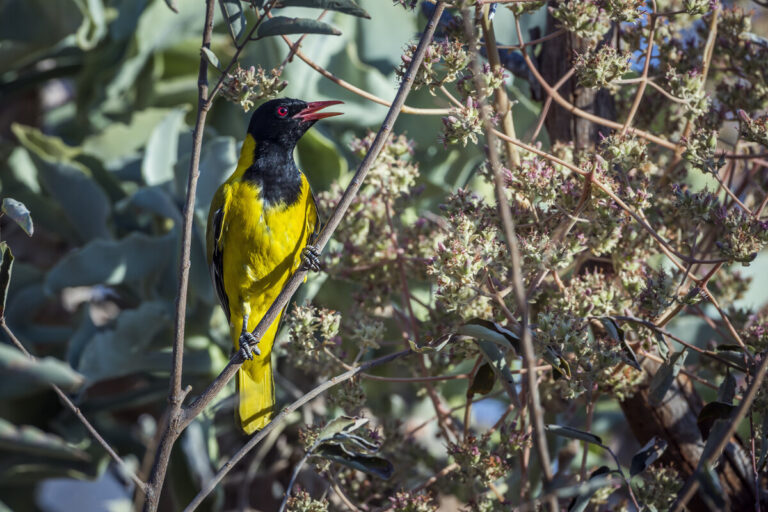
The birds in question are familiar park neighbors: great tits, house sparrows, blackbirds, magpies and pigeons, among others. The finding raises a simple but puzzling question about how these birds size up the people who share their streets and green spaces.
A walking test in city parks
The experiment was easy to picture. A volunteer spotted a bird in a city park or another green space, then walked straight toward it. The team recorded how close the person managed to get before the bird flew off. Biologists call this measure the flight initiation distance, and it is a common way to gauge how risky an animal thinks a situation is. The farther away a bird takes off, the more wary it is.
To keep the comparison fair, the male and female walkers were paired so that they had a similar height and wore similar clothes. That way, a difference in the birds’ reactions could not simply come down to one person looking bigger or more eye-catching than another.
The researchers gathered 2,701 observations in Czechia, France, Germany, Poland and Spain. The results were published in People and Nature, a journal of the British Ecological Society.
Men got about three feet closer
On average, men could walk roughly one meter (a little over three feet) nearer to a bird than women could before it took flight. That gap showed up in all five countries.
It also showed up in every one of the 37 bird species the team looked at. That includes species that tend to spook easily, such as magpies, and species that usually let people come quite close, such as pigeons. Whether a bird was jumpy or relaxed by nature, it still kept a little more distance from women.
Daniel Blumstein, a professor at the University of California, Los Angeles, who took part in the research, says he trusts the data even without an explanation for it. “I fully believe our results, that urban birds react differently based on the sex of the person approaching them, but I can’t explain them right now,” he said. He added that the team’s comparison methods showed the pattern held across cities and species, “but we simply don’t have a conclusive explanation yet.”
So what are the birds noticing?
That is the open question. The scientists have floated a few ideas. Birds might pick up on chemical signals such as pheromones, the scent cues bodies give off. They might react to differences in body shape. Or they might be reading the way men and women tend to walk.
For now, none of these ideas has been tested on its own, and the team is clear that they are speculation. More experiments will be needed to find out which cue, if any single one, makes the difference.
Federico Morelli of the University of Turin, a co-author of the study, sees that mystery as the best part. “This is maybe the most interesting part of our study,” he said. “We have identified a phenomenon, but we really don’t know why.” In his view, the results point to “the birds’ sophisticated ability to evaluate their environment.”
A surprise for the scientists themselves
For Yanina Benedetti of the Czech University of Life Sciences Prague, another member of the team, the result was personal. “As a woman in the field, I was surprised that birds reacted to us differently,” she said.
Her point goes beyond birds. Many studies of animal behavior quietly assume that the person watching the animals has no effect on what they see. This study suggests that, at least for city birds, the observer is not neutral. That matters for how wildlife research is designed, and Benedetti notes it also touches on equality in science, since women and men in the field may get different reactions from the animals they study.
She suggests the next round of research should pull apart the possible cues instead of lumping them together under the label of observer sex. “Follow-up studies could focus on individual factors such as movement patterns, scent cues, or physical traits, testing them separately,” she said.
What this means
The main takeaway is that birds living alongside people may be tuned in to details that people barely notice about each other. Working out which signals they use could help scientists understand how wild animals judge danger in places they share with humans.
The researchers are careful not to overstate things. Even with thousands of observations, they describe the findings as preliminary. Further studies will need to check whether the same gap between reactions to men and women turns up in other places and other bird populations.
Until then, the next time a sparrow or blackbird lets one person stroll closer than another in the park, there may be more going on than chance. The birds appear to be paying attention, even if nobody knows yet exactly to what.
Source: ScienceDaily