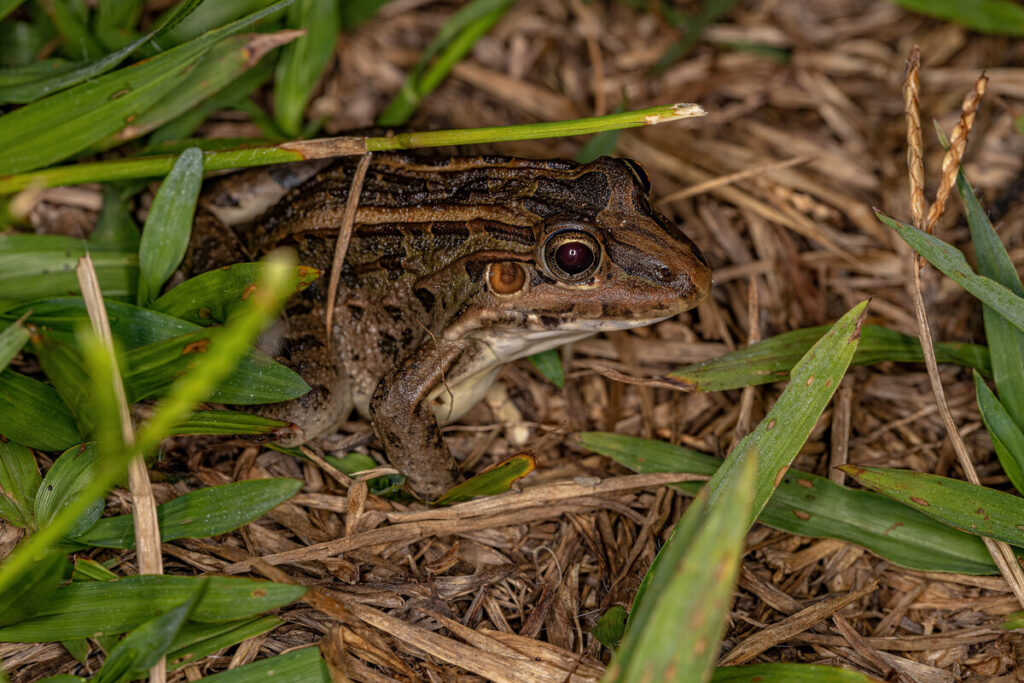
Deep in the western Amazon, scientists have described a frog nobody had formally recognized before. It looks almost exactly like its relatives, so what gave it away was a mix of clues, including its DNA and the way it sings.
The new species is called Adenomera varcena. It lives in forests that flood for part of every year, and its discovery is a good reminder that the world’s largest rainforest still holds animals hiding in plain sight.
A frog found in the flooded forest
The story starts with field trips to the Upper Juruá River region, in the western part of Acre, in Brazil. Researchers explored patches of forest near the Moa and Crôa rivers, not far from the town of Cruzeiro do Sul.
The frog’s name tells you where it lives. The word varcena points to the Amazon’s floodplain forests, places that sit under water during certain seasons. That is exactly where the team found it.
This detail surprised the scientists. Frogs in the group called Adenomera are usually linked to dry forests, not wet ones. Finding one of them living in seasonally flooded forest shows a kind of home that nobody had connected to this group before.
Why looks were not enough
Some animals are so similar that you could put two of them side by side and still not know they belong to different species. Biologists call this cryptic diversity, and it makes their job tricky.
To be sure they had something new, the researchers did not rely on appearance alone. They gathered several kinds of evidence:
- DNA data
- Recordings of the frog’s calls
- Body shape, which scientists call morphology
- Information about its habitat
- Specimens kept in scientific collections, used for comparison
There was one small visual clue. Unlike its close relatives, Adenomera varcena does not have a dark spot on the underside of its forearm. But a missing spot is easy to overlook, so the other evidence mattered just as much.
What it sounds like
Here is the part we love most. Frogs are famous for their voices, and a mating call, the sound a frog makes while looking for a partner, can work almost like a name tag for its species.
The call of this new frog is a short sound repeated at a slow rhythm. The researchers also found other specific features in its call that set it apart from the frogs it resembles most. Together with the DNA results, that acoustic signature helped confirm it was a species of its own.
In other words, the frog was partly identified by ear. Two animals can look like twins and still sound different, and those differences can reveal that they are not the same species at all.
More hidden frogs may be waiting
The team also found signs that many other Adenomera lineages have not yet been formally described. That suggests there is still a lot to learn about how these amphibians spread out and diversified across the Amazon.
The study was published in the journal Ichthyology & Herpetology. Its authors include Célio F. B. Haddad, a professor at São Paulo State University (UNESP), and Thiago R. Carvalho, a professor at the Federal University of Minas Gerais (UFMG). Researchers from several other universities in Brazil and Ecuador also took part.
Why it matters
Because this frog seems to prefer flooded forest, changes in when and how much the forest floods could affect it, especially its breeding. Climate change may shift those flooding patterns, but scientists cannot yet say by how much, or how strongly the frog would be affected.
Carvalho explained the challenge: “Since we don’t yet know in detail the species’ ecological requirements and its natural history, it’s difficult to predict the impacts of climate change.” He added a sobering thought: “Species may become locally extinct even before they’re formally recognized as species through their naming and description.”
Giving a species a name is more than a label. An animal that science has not described can be left off lists of threatened species, and miss out on the protection those lists bring.
Haddad put it plainly: “Currently, the pace of ecosystem destruction outpaces the capacity of taxonomic studies to keep up.” In his view, describing new species is one of the tools that can help protect them.
So the next time you hear frogs calling at night, remember that each voice may carry information. For this little Amazon frog, a slow and simple song helped tell the world it exists.
Source: ScienceDaily