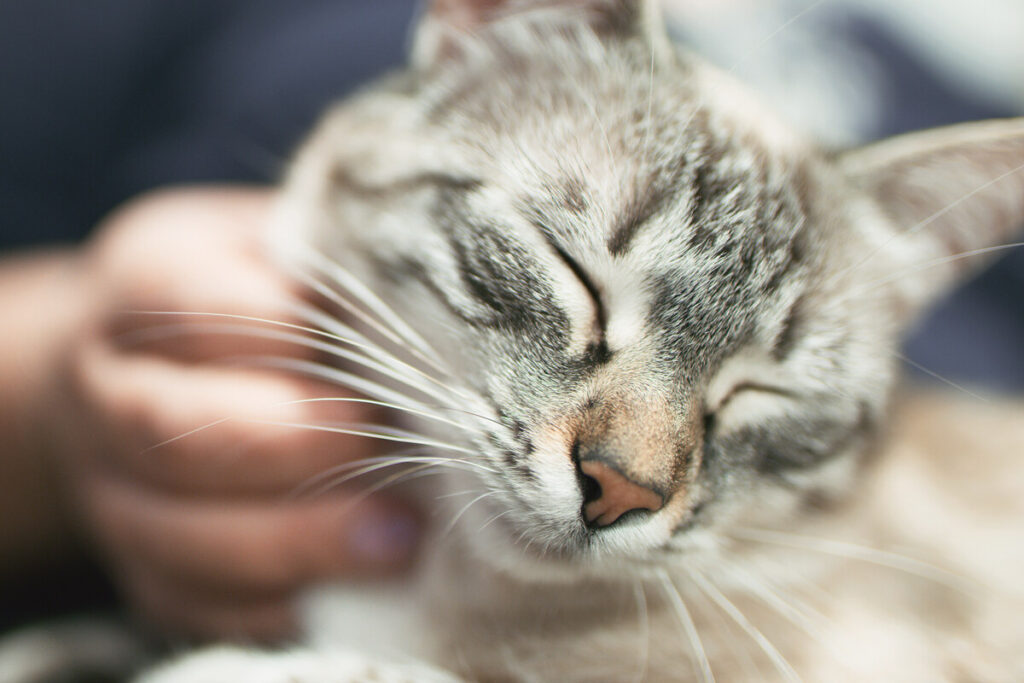
Cat owners tend to focus on the meow, but a new study suggests the purr is the sound that really tells one cat from another. Researchers in Berlin and Naples found that each cat’s purr carries a steady personal signature, while meows shift so much with the situation that they make a poor ID badge.
A computer test for cat voices
The team came from the Museum für Naturkunde Berlin and the University of Naples Federico II. Their question was simple: if a computer hears only a sound, can it figure out which cat made it?
To find out, they borrowed tools first built to recognize human speech and ran them on cat recordings stored in the Animal Sound Archive at the Berlin natural history museum. The archive holds calls from both house cats and wild cats, which let the scientists compare the two.
Meows and purrs both turned out to contain clues about the individual cat. But purrs were far more reliable, and they gave the computer a much better chance of naming the right animal.
“People pay most attention to meowing because cats mainly use these vocalizations toward us,” said Danilo Russo, the study’s first author. “But once we examined the acoustic structure closely, the even, rhythmic purr turned out to be the better cue for identifying individual cats.”
What it sounds like
A purr is a low-pitched sound that stays smooth and regular from one moment to the next. That steadiness is exactly what makes it useful as a signature. When a sound changes very little each time a cat makes it, the small details that belong to that one cat are easier to pick out.
Cats often purr when they feel calm, for example while being petted or while sitting close to a person they know well. Purring also plays a role right after birth, when a mother cat and her kittens use it to communicate.
“Every cat in our study had its own characteristic purr,” said co-author Anja Schild.
The meow is a different story. Cats use it for all kinds of jobs, especially when talking to people. A meow can be a request for dinner, a call for attention, or what sounds a lot like a complaint. In the recordings, the same cat produced meows that varied a great deal from one to the next, and that wide range is what makes the meow a weak clue to identity.
House cats meow more freely than wild cats
The researchers also wanted to know how living with people may have shaped these sounds. So they compared the meows of domestic cats with recordings of five wild species from the same museum archive: the African wildcat, the European wildcat, the jungle cat, the cheetah and the cougar.
House cats stood out right away. Their meows were much more varied than those of any of their wild relatives. The team sees this as a sign that sharing homes with humans changed the way cats use their voices.
Mirjam Knörnschild, the study’s senior author and a bioacoustician at the Berlin museum, pointed to how different people can be. People differ widely in their daily routines, in what they expect from a cat and in how they respond to it. In her view, that variety likely rewarded cats that could tune their meows to whoever they were living with.
“Our results support the idea that meows have evolved into a highly adaptable tool for negotiating life in a human-dominated world,” she said.
Two sounds with two different jobs
Put together, the findings suggest that a cat’s two best-known sounds do very different work. The purr, low in pitch and highly consistent, acts like a dependable signature. According to the researchers, it can help cats, and the people around them, recognize familiar individuals during close, quiet moments.
The meow, on the other hand, is built for flexibility rather than identity. It lets a cat express a wide mix of needs and feelings to the humans it lives with, and it can change shape to get the message across.
In short, domestication seems to have turned the meow into an all-purpose tool for talking to people, while leaving the purr as a steady marker of who each cat is.
Why it matters
Much of what we know about cat communication comes from the sounds cats aim at us, and the meow gets most of the attention. This study is a reminder that the steadier sound may carry information that is just as important, even if it is easier to overlook.
It also shows how a large collection of animal recordings can answer questions long after the sounds were captured. By comparing house cats with wild species from the same archive, the team could look at how a voice may have changed over the long history of cats living alongside people.
The study was published in Scientific Reports.
Source: ScienceDaily