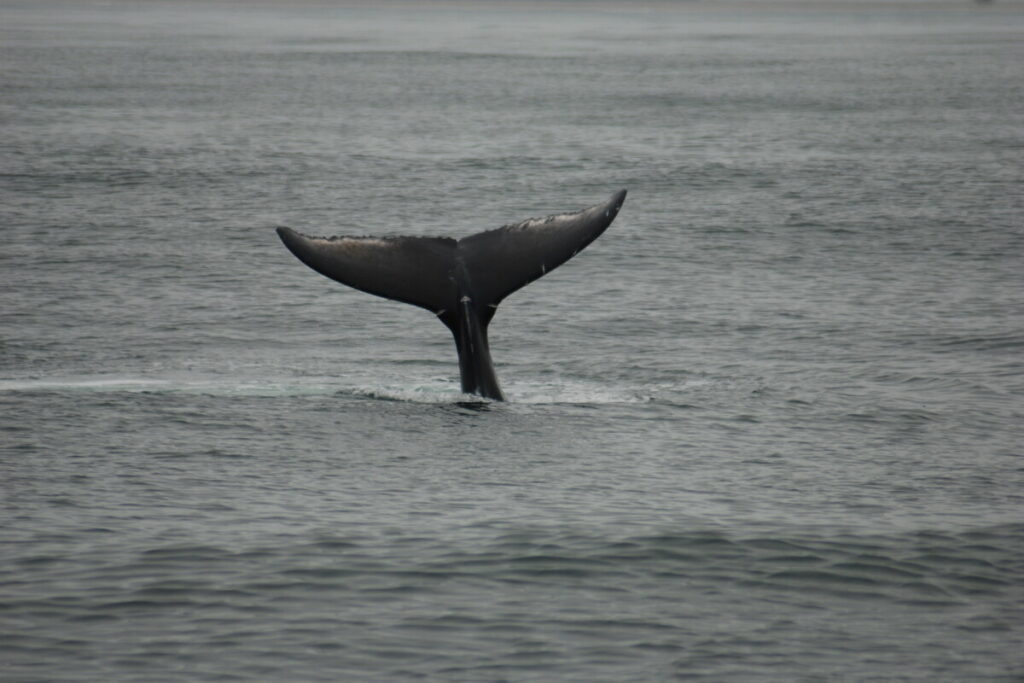
A humpback whale photographed off Brazil in 2003 turned up 22 years later in Hervey Bay, Australia. The two sightings sit 15,100 kilometers (about 9,380 miles) apart, the longest movement ever confirmed for a single humpback whale anywhere on Earth.
The record comes from a new study published in Royal Society Open Science. Researchers from Griffith University and Pacific Whale Foundation found not one but two humpbacks that had switched between breeding grounds on opposite sides of the planet: eastern Australia and Brazil. Until now, nobody had confirmed a whale making that kind of crossing.
How scientists recognize a single whale
You can’t put a name tag on a humpback, but you don’t need to. Every humpback has its own pattern of markings on the underside of its tail, called the fluke. That pattern works a lot like a fingerprint.
The team gathered 19,283 high-quality fluke photos taken between 1984 and 2025 in eastern Australia and Latin America. Some came from professional researchers. Many others came from ordinary whale watchers who uploaded their pictures to Happywhale, a global platform for tracking individual whales.
Software scanned the images for possible matches. Then the researchers checked every candidate pair by hand to make sure the same tail really appeared in both places.
Two whales, two record trips
The first whale was photographed in Hervey Bay, Queensland, in 2007 and spotted there again in 2013. In 2019, it showed up near São Paulo, Brazil. The shortest straight-line distance between those two breeding areas is about 14,200 kilometers (roughly 8,820 miles), close to the distance between Sydney and London.
The second whale is the record holder. It was first seen in 2003 at Abrolhos Bank, off the coast of Bahia, which is Brazil’s main nursery area for humpbacks. Back then, it was swimming with a busy group of nine adults. In September 2025, the same tail appeared in Hervey Bay, Australia, and this time the whale was on its own.
Those 15,100 kilometers are only the distance between two sightings, so the real journey was probably longer. Scientists only know where each trip started and ended. The actual route these whales took through the ocean is still a mystery.
“These whales were photographed decades apart, by different people, in opposite parts of the world, separated by two different oceans, and yet we can connect their journey,” said Stephanie Stack, a PhD candidate at Griffith University and co-author of the study.
A very rare move
As impressive as these trips are, they almost never happen. The records cover more than four decades and nearly 20,000 identified humpbacks. Out of all of them, only these two whales were found to have traveled between the Australian and Brazilian breeding regions. That works out to just 0.01 percent of the whales in the data.
So how would a whale end up on the wrong side of the world? The findings back an idea known as the “Southern Ocean Exchange” hypothesis. Humpbacks from different breeding populations may sometimes meet in the same feeding areas around Antarctica. A few of them may then head home along a different route and settle into a brand new breeding region.
What it could mean for humpback songs
Humpback whales are well known for their songs, and this is where the story gets especially interesting for whale fans. According to Stack, humpback songs are known to spread from group to group across entire ocean basins, a bit like music trends spread among people. A whale that moves to a faraway breeding ground may bring new song styles along with it.
Travelers like these can also help keep genetic diversity healthy across populations. “Despite their rarity, these exchanges matter for the long-term health of whale populations,” Stack said.
Why it matters
The researchers think climate change could make these long crossings more common in the future. Changes in Antarctic sea ice and in where Antarctic krill, the whales’ main food, can be found may be shifting how humpbacks migrate over time.
The discovery also shows what long-term research and shared photos can achieve. “This kind of research highlights the value of citizen science,” said lead researcher Dr. Cristina Castro of Pacific Whale Foundation. “Every photo contributes to our understanding of whale biology and, in this case, helped uncover one of the most extreme movements ever recorded.”
In other words, the next whale tail you photograph on vacation could end up helping scientists solve a mystery.
Source: ScienceDaily