Some people seem to get bitten wherever they go, but a new study suggests that being a “mosquito magnet” depends on which mosquito is doing the biting. Researchers found that three major disease-carrying species each preferred different people.
Three mosquito species, 119 volunteers
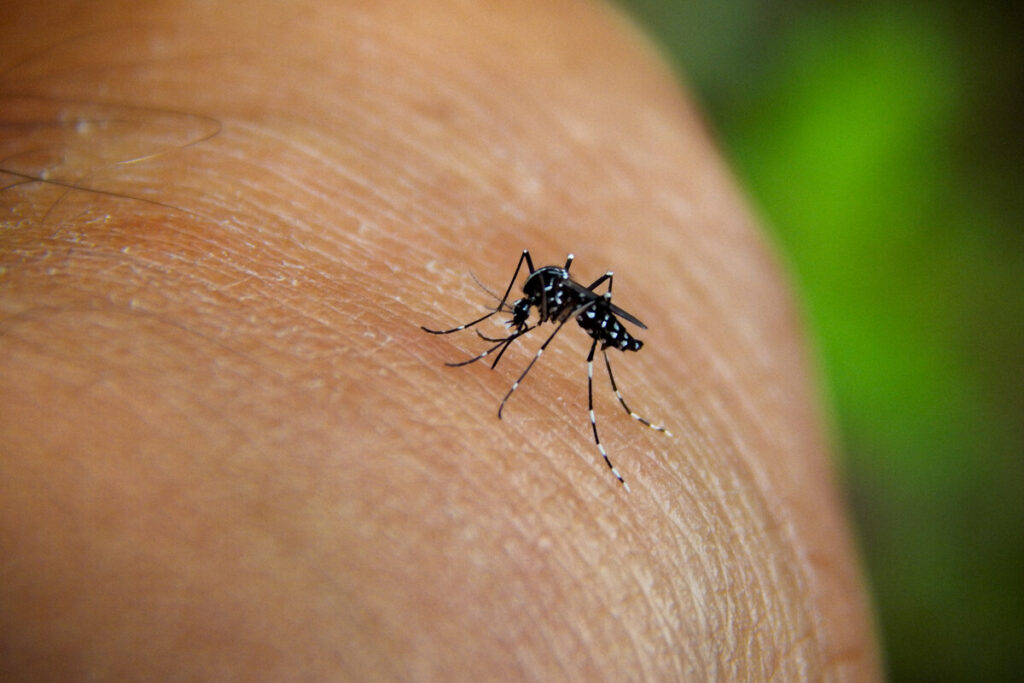
A team at Florida International University (FIU) in Miami compared how three mosquito species reacted to the same group of 119 volunteers. The results were published in the journal iScience. The species were Aedes aegypti, the Asian tiger mosquito (Aedes albopictus) and the southern house mosquito (Culex quinquefasciatus). Together they spread diseases such as yellow fever, dengue, Zika and West Nile.
The big surprise was that no single volunteer attracted all three species. Each mosquito favored its own set of people, and those choices seemed to follow each person’s body chemistry and natural skin odor. In other words, the same person can be an appealing target for one species and a poor choice for another. Ph.D. student Kaylee Marrero led the work, which the team describes as the first to compare several mosquito species on the same human participants.
Marrero said she had not expected this outcome. “We didn’t expect the species to prefer different people when we started the study,” she said.
What each species preferred
- Aedes aegypti was drawn to people who wore no added fragrance and whose skin carried lower levels of certain volatile chemicals. It usually bites by day and leaned slightly toward men over women.
- Asian tiger mosquito is also a daytime biter. It was most attracted to people whose skin gave off more ketones and plant-like volatile compounds that occur naturally.
- Southern house mosquito feeds after dark and seemed especially tuned to the skin microbiome, the community of bacteria, fungi and other tiny organisms that live on our skin. Some bacterial families made a person more appealing, while others seemed to keep the mosquitoes away.
The hidden chemistry of human scent
Human skin releases a mix of more than 1,000 volatile organic compounds, and scientists have not yet identified or fully understood many of them. That complexity may leave plenty of room for different mosquitoes to read the same person in different ways, which fits what the volunteers’ results showed.
To dig into it, the researchers collected body odor and skin microbiome samples from the volunteers while running the mosquito preference tests. They then checked which chemicals and microbes were present and how abundant each one was. The mosquito choices lined up well with differences in skin chemistry and bacteria.
Matthew DeGennaro, the neurogeneticist who leads the team and directs FIU’s Biomolecular Sciences Institute, said the pattern was clear. “It is clear to me now that our skin microbiomes define our human odor signature. Each species found its own way to decode that signature,” he said.
Why it matters
Because each species follows different cues, a repellent built for one may not work as well against another. By pinpointing the compounds and skin bacteria that attract or discourage each mosquito, the team hopes to lay the groundwork for species-specific repellents that offer more targeted protection.
DeGennaro said that “isolating the components of human odor that attract or repel mosquitoes could lead to novel strategies to combat vector-borne diseases.” Communities could also focus on the particular species spreading disease in their own region, instead of assuming every mosquito is drawn to the same people for the same reasons.
For now, this is early groundwork rather than a ready-made product. The study points toward future repellents, but it does not yet offer a new way for anyone to avoid bites.
Source: ScienceDaily