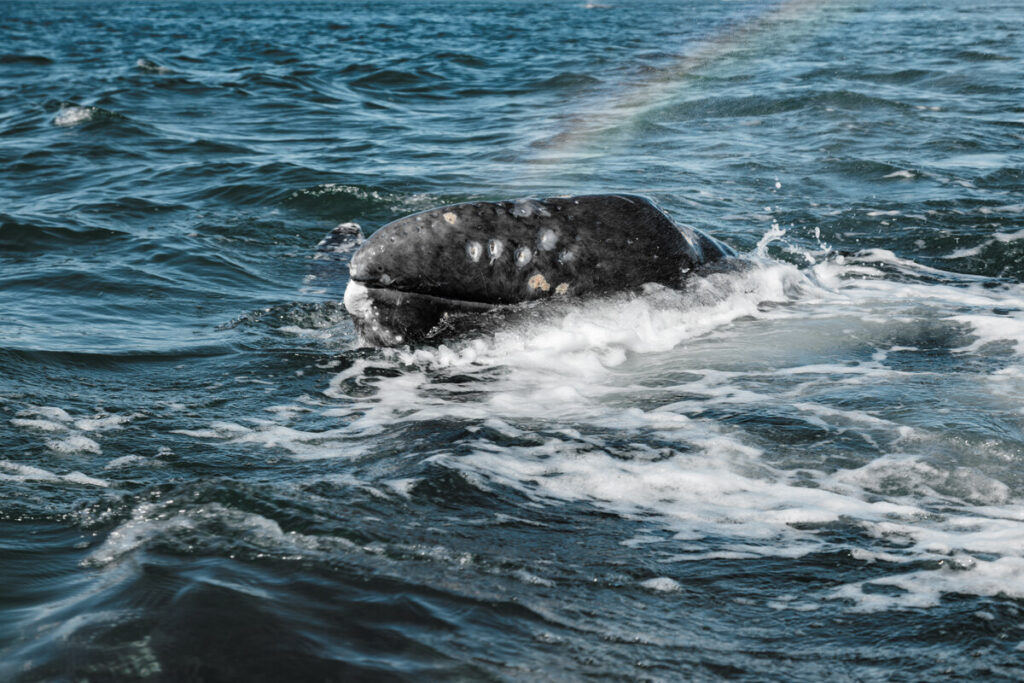
Gray whales have started slipping into San Francisco Bay to feed, but the detour is dangerous. A new study found that at least 18% of the whales identified there later died in the area, and boat strikes were a major cause.
A feeding stop that was never part of the route
Gray whales are famous for a long migration between food-rich Arctic waters and warm breeding lagoons in Baja Mexico. They usually do not eat much on the way. They depend on the fat they stored in the Arctic.
That plan is getting shakier. Warming conditions are disrupting the Arctic food supply, and according to the National Oceanic and Atmospheric Administration, the population has dropped by more than half since 2016. Sightings of calves have become rare.
San Francisco Bay was not historically on the migration route. That changed in 2018, when whales began showing up more often. Local whale deaths rose at the same time.
Counting whales by their skin
To find out whether the whales were regulars or one-time visitors, researchers built a catalog of individual animals. They used photos and sightings from the public between 2018 and 2023, plus organized surveys from 2023 to 2025. Each whale was identified by the unique markings on its skin. The team also compared the catalog with necropsy data from stranded whales.
The catalog held 114 individual whales. Only four were seen in more than one year, which suggests that most whales do not come back. Scientists think the Bay may work as an emergency stop for animals in poor condition. Unusually thin whales have also been seen feeding in other places that are not typical habitat for the species.
Ship strikes and starvation
Between 2018 and 2025, 70 gray whales were found dead in the surrounding region. Thirty of them were confirmed to have been hit by vessels. Among the rest, where a cause of death could be determined, many showed signs of malnutrition. The researchers matched 21 of 45 identifiable dead whales to animals in their catalog.
“At least 18% of the individuals identified in San Francisco Bay later died in the area,” said Bekah Lane of the Center for Coastal Studies, a co-author of the study. “Our broader analysis of local strandings both inside and outside San Francisco Bay found that over 40% of these whales died of trauma from vessels.”
The Bay is hard on whales for a simple reason. Gray whales ride low in the water when they surface, so they are tough to spot in fog, which is common there. “San Francisco Bay is a highly trafficked waterway, and the Golden Gate Strait serves as a bottleneck through which all traffic and whales must enter and exit,” explained Josephine Slaathaug of Sonoma State University, the lead author.
What this means
The numbers keep growing. In 2025 alone, 36 whales entered the Bay, and groups sometimes included more than 10 individuals. The researchers say it is still unclear whether so few whales return because many die, and whether starvation, vessel strikes or both are the main cause. It is possible that weakened whales are less able to dodge oncoming ships.
Possible steps include educating commercial vessel operators, adjusting ferry routes, or setting speed limits in high-risk areas. “Route changes and speed restrictions have been found to significantly reduce vessel strike mortality to large whales, and an assessment of risk can help identify the most effective strategies to protect these animals,” said Lane.
The team is careful about what the study can and cannot say. “This study is our best analysis of the data we collected, but it’s important to consider that we do not have the full picture of each whale’s movements on a daily timescale,” said Slaathaug. For now, the results offer a snapshot of how gray whales are responding to a changing ocean, and it is not a comforting one.
Source: ScienceDaily