Scientists have found a brand new fish in the Brazilian Amazon, and it is dressed in bright orange. The little killifish was spotted in just three small forest pools, and the team that described it believes it may already qualify as an endangered species.
The fish has been named Laimosemion laranja. It is tiny, yet its colors are what caught the researchers’ eye in the first place.
A tiny fish with a bold orange pattern
Killifish are small freshwater fish, and this one is no exception. It measures less than 3 cm in standard length, which is the way fish scientists measure body size without counting the tail fin. That is a bit more than an inch.
Males carry rows of bright orange spots on the front half of the body, then switch to bold orange chevrons, or V shapes, toward the tail. All that orange pops against pale gray sides, which makes the pattern easy to spot.
A surprise in the forest streams
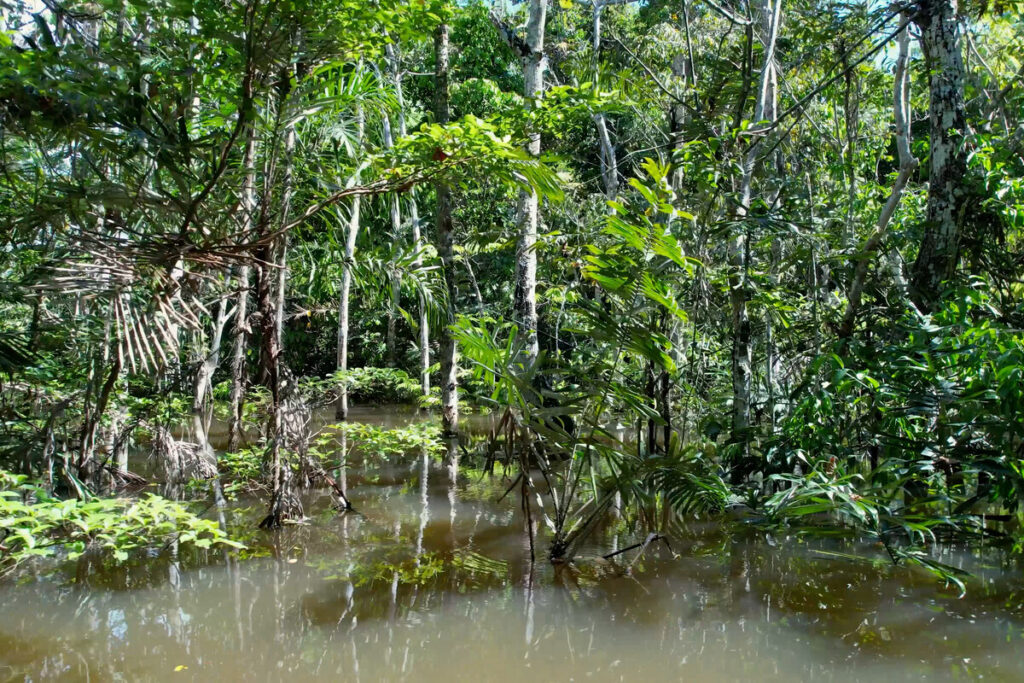
The team was not out hunting for new species. They were studying how fish in the family Rivulidae have evolved different life cycles and survival strategies in the many kinds of habitats found across Brazil. Their fieldwork took them to the Rio Cajari drainage in southern Amapá, a state in the north of the country.
That is where they found a fish that looked unlike anything they had seen there before. Lead researcher Yuri Abrantes, of the Universidade Federal do Rio Grande do Norte, said the team was sampling small rivers that locals call igarapés when they came across it. “We found this fish with a very striking coloration, which immediately caught our attention,” he said.
He described the find as “an unexpected moment.” Both males and females had colors that were new to the team in that area, and the result, he said, was admiration and “a great deal of curiosity.”
How scientists knew it was new
A pretty pattern alone is not enough to declare a new species, so the researchers looked much more closely.
They measured the proportions of the fish’s body, counted its scales and examined details of its skeleton. Then they compared all of that with closely related species. Finally, they studied its mitochondrial DNA, a type of genetic material that helps scientists tell similar species apart. The genetic results confirmed that this orange fish had never been recognized by science before.
For Abrantes, that moment felt “special.” He saw it as a chance to add to what is known about life in the Amazon and to draw attention to areas that are “still poorly explored but highly threatened.”
A name with two meanings
In Portuguese, laranja means orange. It works for both the color and the fruit, which suits a fish covered in orange markings. The name also honors Laranjal do Jari, the municipality in Amapá where the fish was found.
“We wanted to choose a name that would highlight a characteristic of the fish while also fostering a sense of connection with the people of the region where it was discovered,” Abrantes explained.
The killifish trick for surviving dry pools
The discovery may also help scientists understand how Amazonian killifish evolved. Some members of this group have a remarkable way of coping with pools that dry up for part of the year. Their embryos can pause their development and wait in damp mud. When the seasonal rains fill the pools again, the embryos pick up where they left off.
This kind of annual life cycle did not appear just once. According to Abrantes, “Laimosemion represents one of the five independent origins of the annual life cycle within the family Rivulidae.” The new species, he added, expands what is known about how this group evolved in the region.
Why it may already be endangered
The good news of a new species comes with a worry. So far, Laimosemion laranja has turned up in only three small forest pools near Laranjal do Jari, and all three show signs of human disturbance.
Deforestation, mining and the growth of the city are all putting pressure on the land around them. One pool sits close to water that has turned a different color because of sediment from mining. Another is inside the city itself, where plastic pollution is affecting the habitat.
Altogether, the fish’s known range is estimated at only 25 square kilometers. Because that area is so small and faces several threats at once, the researchers believe the species meets the criteria to be listed as Endangered under the guidelines of the International Union for Conservation of Nature (IUCN).
What this means for the Amazon
The team has suggested a practical step: expanding the borders of the nearby Rio Cajari Extractive Reserve so that it covers the pools where the fish lives.
The bigger lesson goes beyond one small fish. Many corners of the Amazon have barely been explored, and new species are still waiting to be found there. Without stronger protection, animals like this orange killifish could be in serious trouble before scientists even have the chance to learn how they live.
Source: ScienceDaily