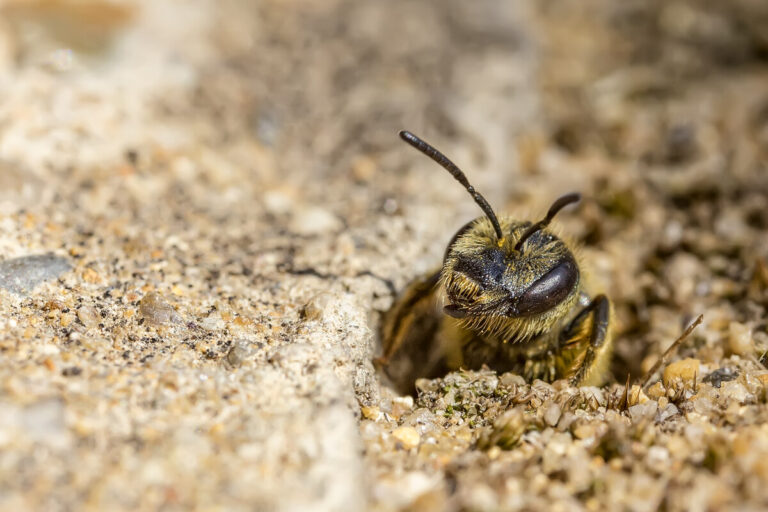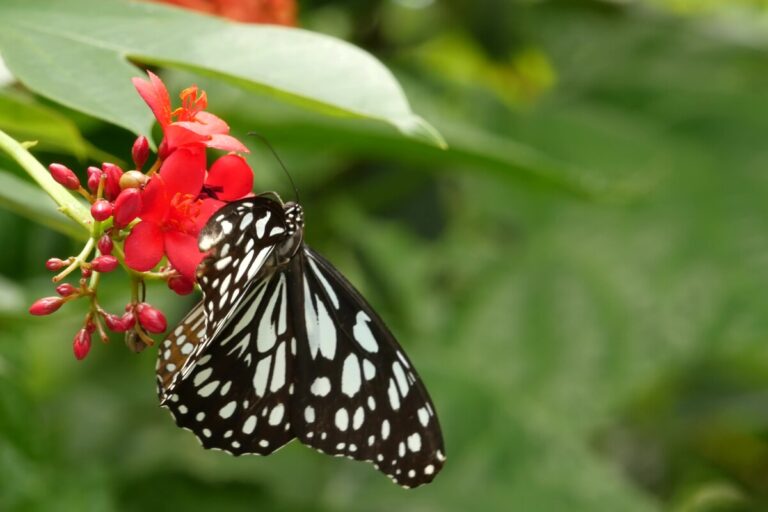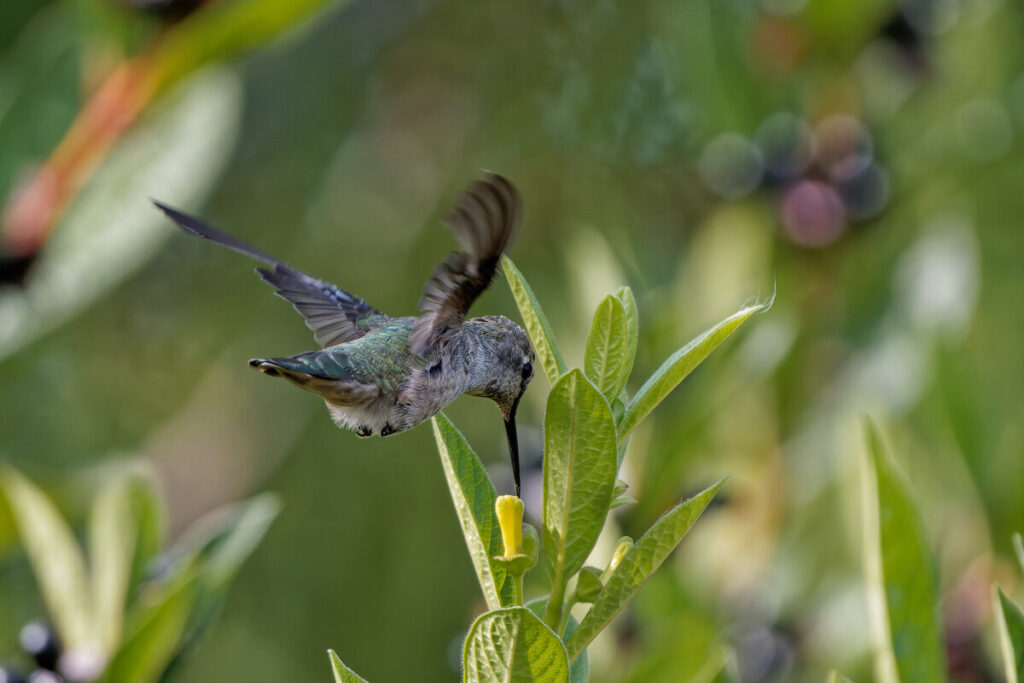
Bees and hummingbirds visit flowers all day for sugary nectar, and it turns out that nectar often comes with a small dose of alcohol. A new survey by biologists at the University of California, Berkeley found ethanol in the nectar of almost every plant species they tested. For a hungry hummingbird, those tiny traces may add up to the equivalent of about one drink a day.
A quiet surprise inside flowers
The team behind the study set out to measure something nobody had checked on a large scale before: how much alcohol is hiding in floral nectar. They looked at 29 plant species and found ethanol in at least one sample from 26 of them.
In most cases, the amounts were very small. The alcohol is most likely made by yeast, the same kind of microscopic fungus that turns sugar into alcohol in bread dough or beer. When yeast lands in a flower and feeds on the sugar in the nectar, a little ethanol is left behind. The strongest sample the researchers measured contained 0.056% ethanol by weight.
That is far weaker than any drink a person would order. But for nectar feeders, what counts is how many sips they take.
Why a tiny bird can end up with a big dose
Hummingbirds have one of the most demanding diets in the animal world. Every day, they drink somewhere between 50% and 150% of their own body weight in nectar. Using those feeding habits, the researchers estimated how much alcohol an Anna’s hummingbird, a common species along the Pacific coast, takes in each day.
Their answer was roughly 0.2 grams of ethanol per kilogram of body weight. Scaled to body size, that is similar to a person having about one alcoholic drink a day.
The team also ran the numbers for another hummingbird species and three sunbird species. Sunbirds fill the same role in Africa that hummingbirds fill in the Americas, feeding in South Africa on plants such as honeybush. On native flowers, these birds landed in a similar range, about 0.19 to 0.27 grams per kilogram per day.
How they compare with other animals
To put those numbers in context, the team compared the birds with other animals that eat foods containing natural alcohol:
- The pen-tailed tree shrew had the highest intake, at 1.4 grams per kilogram per day.
- The European honeybee had the lowest, at 0.05 grams per kilogram per day.
- A person having one standard drink a day comes in at 0.14 grams per kilogram.
Fruit-eating chimpanzees were also part of the comparison.
So why don’t hummingbirds act tipsy
Despite all that nectar, neither bees nor birds show clear signs of being drunk. One reason may be timing: they take in their alcohol a little at a time, spread across the whole day.
Another reason is how fast hummingbirds use energy. Doctoral student Aleksey Maro, who analyzed the nectar with postdoctoral fellow Ammon Corl, put it simply: “Hummingbirds are like little furnaces. They burn through everything really quick, so you don’t expect anything to accumulate in their bloodstream.”
The birds also seem to know their limit. Earlier experiments by the same group, using a feeder outside the office of UC Berkeley professor Robert Dudley, showed that Anna’s hummingbirds hardly care about alcohol in sugar water below 1%. When the level reached 2%, though, they visited the feeder only about half as often.
“Somehow they are metering their intake,” Dudley said, which suggests that low levels may be closer to what the birds meet in the wild.
Those feeder tests also hint that fermented sugar water may give a hummingbird even more alcohol (about 0.30 grams per kilogram per day) than real flowers do.
Feathers show that birds process alcohol
Another study, led by former graduate student Cynthia Wang-Claypool, found a telltale chemical in bird feathers, including those of Anna’s hummingbirds. The chemical, called ethyl glucuronide, is produced when a body breaks down ethanol. Its presence means these birds are not just swallowing alcohol, they are processing it in a way similar to mammals.
Corl summed up how the pieces fit together. The lab work showed the birds will drink ethanol but avoid it when it gets too strong. “The feathers are saying that, yes, they will metabolize it,” he said, and the new study shows that alcohol is common in the nectar they rely on.
Why it matters
Nectar already contains other substances that can affect how animals behave, such as nicotine and caffeine. The researchers think ethanol could have subtle effects too, even if the birds never get a buzz.
“There are other things that the ethanol could be doing aside from creating a buzz, like with humans,” Maro said. Dudley agreed that the alcohol may still shape the birds’ behavior in ways that are not yet understood.
The findings also suggest that many animals, possibly including the ancestors of humans, may have evolved a tolerance for alcohol, and sometimes even a taste for it. “The comparative biology of ethanol ingestion deserves further study,” Dudley said.
The study, published in Royal Society Open Science, is part of a five-year National Science Foundation project studying how hummingbirds and sunbirds adapt to sugar-rich diets and often fermented nectar.
Source: ScienceDaily