For more than a century, the gentoo penguin was treated as one bird spread across the Southern Ocean. A new genetic study shows it is really four separate species, and one of them, living on the remote Kerguelen Islands, had never been named before.
A penguin hiding in plain sight
The Kerguelen Islands are about as remote as it gets. Their French nickname, the Desolation Islands, gives you an idea of how lonely they are: the nearest permanently inhabited land is close to 2,000 miles away. That isolation helps explain how a whole penguin species went unnoticed for so long.
The new bird is called the southeastern gentoo penguin, or Pygoscelis kerguelensis. It is the first new penguin species to be named in more than 100 years. The work was led by researchers in Chile and at the University of California, Berkeley, and it appeared in the journal Communications Biology.
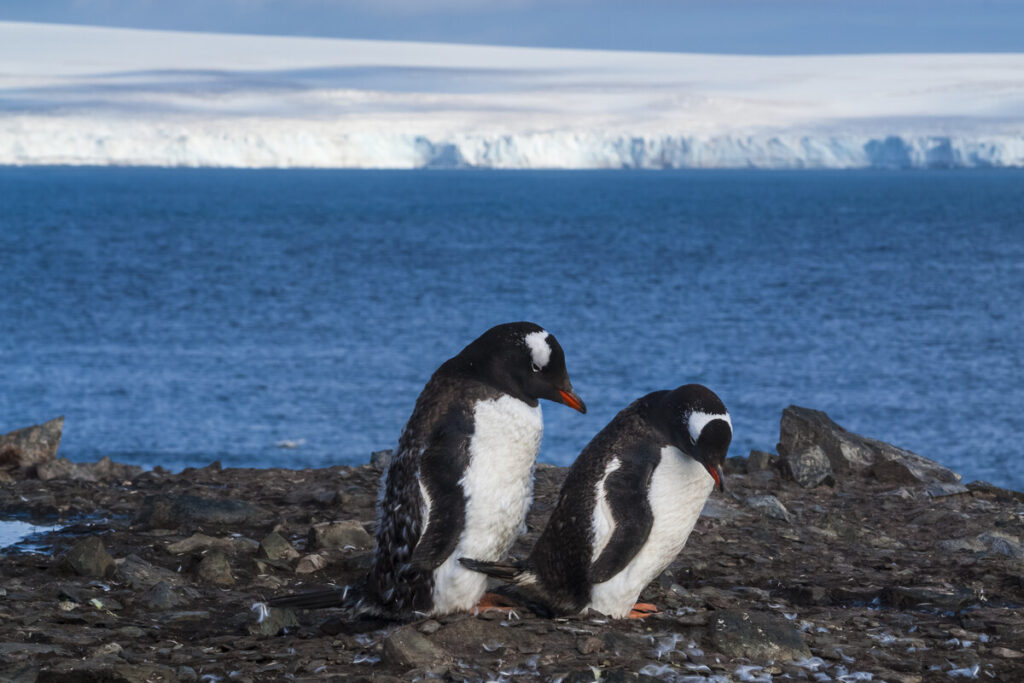
So why did nobody spot it sooner? Because at a glance, it looks just like any other gentoo. It has the same black back and white belly, a classic penguin outfit that helps hide the bird from predators and from the prey it chases underwater. Only small differences in body size and in its voice set it apart on the outside. Inside its cells, though, the story is very different.
One penguin becomes four
Scientists use the term “cryptic species” for animals that look almost identical to their relatives but carry major genetic differences. That is exactly what the team found here. Besides the brand new Kerguelen bird, three gentoo groups that were once listed only as subspecies turned out to be different enough to count as full species of their own.
Here is how the four now line up across the map:
- Northern gentoo (Pygoscelis papua): found only on the Falkland/Malvinas and Martillo Islands in South America.
- Eastern gentoo (Pygoscelis taeniata): lives on the Crozet, Marion and Macquarie Islands, in warmer and saltier waters.
- Southeastern gentoo (Pygoscelis kerguelensis): a fairly small population on Kerguelen and probably nearby Heard Island.
- Southern gentoo (Pygoscelis ellsworthi): the most common of the four, living on the Antarctic Peninsula, along the Antarctic coast and on South Georgia Island.
Some experts had proposed as many as six subspecies. Rauri Bowie, a professor of integrative biology at UC Berkeley and one of the study’s senior authors, summed it up: “There’s probably no species of penguin where the taxonomy has been more debated than the gentoo penguin.”
Listening to the calls, reading the genes
To settle the debate, the researchers read the complete genomes of 64 penguins from 10 breeding colonies, covering almost the whole area where gentoos live. They also compared how the birds look and behave, including their coloring, their calls, when they breed, what they eat and how they feed.
For a site that loves animal sounds, that detail is a fun one. Voice is one of the few outward clues that separates the Kerguelen penguins from their look-alike cousins. The study does not describe what the calls sound like, so for now the difference is something researchers measured rather than something you could pick out by ear.
Why staying close to home made new species
Gentoos are not picky eaters. They catch fish, krill, squid and cuttlefish, so they rarely need to swim very far from their colonies to find a meal. They also tend to come back to the same nesting spots year after year.
Over a very long time, those homebody habits kept island groups apart. Each population slowly adapted to its own patch of ocean. The researchers estimate that the four species split apart within the last 300,000 to 500,000 years. A natural barrier called the Antarctic Polar Front, where water temperature and saltiness change sharply, also helped keep them separated.
The genes show how each species fits its home. The southern gentoo carries more genes linked to making body heat, storing fat and sensing light, which may help the birds handle big seasonal swings in daylight and the bright glare bouncing off the ice. The eastern gentoo has more genes tied to diving, such as those involved in carrying oxygen. The northern gentoo shows changes related to digestion, heart and muscle activity, which may support long feeding trips underwater.
What this means for the penguins
The news is not equally good for all four. Using climate models, the team looked at where gentoos might still find good habitat in 2050. Under a moderate warming scenario, the island species north of Antarctica could lose suitable habitat on every island where they live today, often with no nearby island to move to.
The southern gentoo in Antarctica may actually gain ground, even as emperors, Adélies and chinstraps are expected to decline with shrinking sea ice.
Juliana Vianna, a professor at Andrés Bello National University in Santiago, Chile, and another senior author, stressed that the gentoo is of most concern in the sub-Antarctic. “It’s very important that conservation institutions in all the different countries involved recognize and take appropriate action to save these three gentoo penguin species,” she said.
Climate is not the only problem. Warming seas, habitat loss, rats and dogs, competition with fishing boats and getting caught in nets all put pressure on penguins outside Antarctica.
Source: ScienceDaily