Octopuses, squid and cuttlefish are famous for their clever brains. A new study from the University of Vienna suggests part of the secret may not be in their genes at all, but in the way their DNA was folded and shuffled around hundreds of millions of years ago.
A family of very smart animals
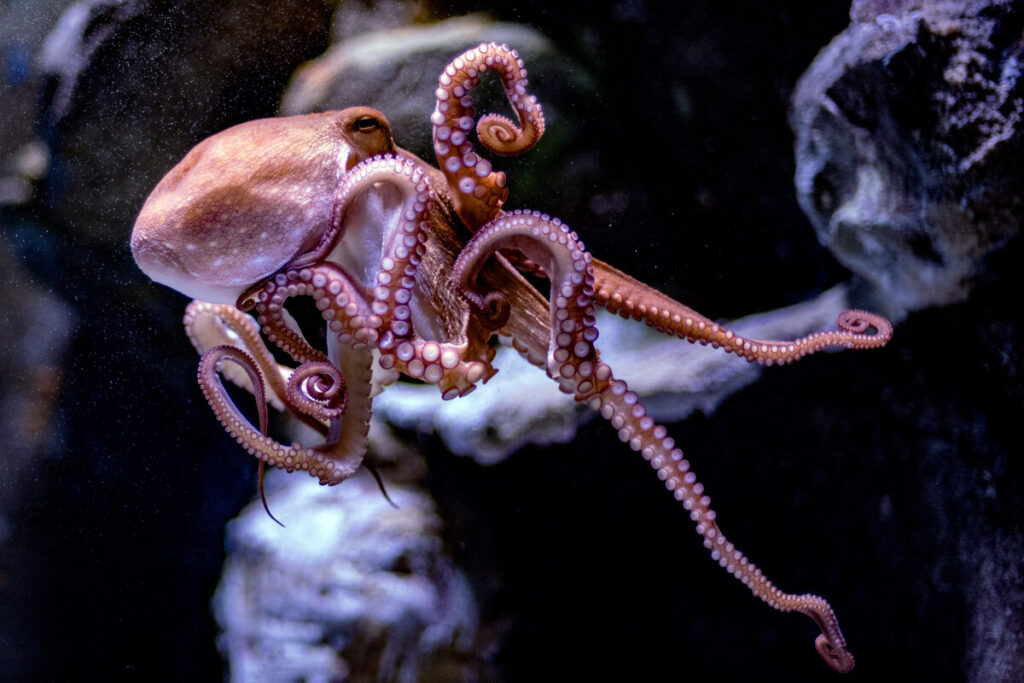
Scientists group octopuses, squid and cuttlefish together under one name: coleoid cephalopods. These animals have some of the most complex nervous systems found anywhere in the animal world. They can work out problems, and they can change how they look in a flash to disappear against their background.
That raises a big question. How did a group of sea animals end up with such powerful nervous systems? The team in Vienna went looking for an answer in an unexpected place, the shape of the DNA inside their cells. Their results appeared in the journal Nature Communications.
DNA is not just a long string
Most of us picture DNA as a twisted ladder. Inside a real cell, though, that ladder does not lie flat and straight. It is folded and packed into a tangled three-dimensional shape. Because of all that folding, two pieces of DNA that sit far apart along the strand can end up sitting right next to each other.
Those close contacts are important. When two stretches of DNA touch, they can affect which genes switch on, when they switch on and how strongly they work. In other words, changing the fold can change how genes behave, even if the genetic code itself stays the same.
“The genome isn’t just a sequence of genes. It’s folded into a complex three-dimensional structure,” said lead author Dr. Thea Rogers. “Understanding how that structure evolves is becoming increasingly important for understanding how new forms of biological complexity arise.”
A huge reshuffle long ago
To study this, the researchers rebuilt a 3D map of how the genome is arranged in octopuses, squid and cuttlefish. Then they compared those maps with information about which genes were active.
They found signs that the genomes of these animals went through a major shake-up hundreds of millions of years ago. Big chunks of genetic material were moved around. Parts of chromosomes that used to be kept apart suddenly ended up close together.
Think of it like rearranging the furniture in a house. Once two rooms share a wall, the people in them can start talking. In the same way, newly neighboring DNA regions could start influencing each other. Over a very long time, these links grew into bigger and more tangled control networks. The scientists call this process “regulatory entanglement.”
Some parts stayed put, others kept changing
One of the most interesting results was that not every part of the genome reacted the same way to all this reshuffling.
Large sections of folded DNA, called chromatin domains, barely changed over long stretches of evolution. They act a bit like the main rooms of the house, giving the genome its basic layout, and they seem to be strongly preserved.
Smaller structures called chromatin loops were a different story. A loop forms when two distant pieces of DNA are pulled together. These loops varied a lot from one species to another, from one body tissue to another, and from one stage of growth to the next.
Many of these flexible loops sat close to genes linked to key cephalopod traits, including how the nervous system develops and works. That pattern suggests the small, adaptable parts of the genome may be the ones that respond most to big genetic rearrangements, opening the door to new patterns of gene activity.
Why it matters
Scientists have often thought of the shape of the genome as something that simply follows along as evolution happens. This study points the other way. It suggests the physical layout of DNA can help steer how evolution unfolds.
The idea also helps solve a puzzle. Living things need their basic systems to keep working, so evolution cannot just break everything and start over. By creating new connections between genetic pieces that already exist, a genome may find new ways to use its genes while keeping the essential parts safe.
For octopuses, squid and cuttlefish, those ancient rearrangements may have helped build new gene control networks that fed into their remarkable nervous systems.
What the study does not say
The researchers are careful here. The results do not prove that these DNA changes directly caused cephalopod intelligence. What they show is a possible mechanism, a way that large genetic shake-ups could create new possibilities without wrecking what an animal needs to survive.
Still, the work highlights a side of evolution that is easy to overlook. What makes an animal special may depend not only on which genes it has, but also on how those genes are arranged and connected inside its cells. For the clever, color-changing animals of the sea, that hidden folding may be part of the story.
Source: ScienceDaily