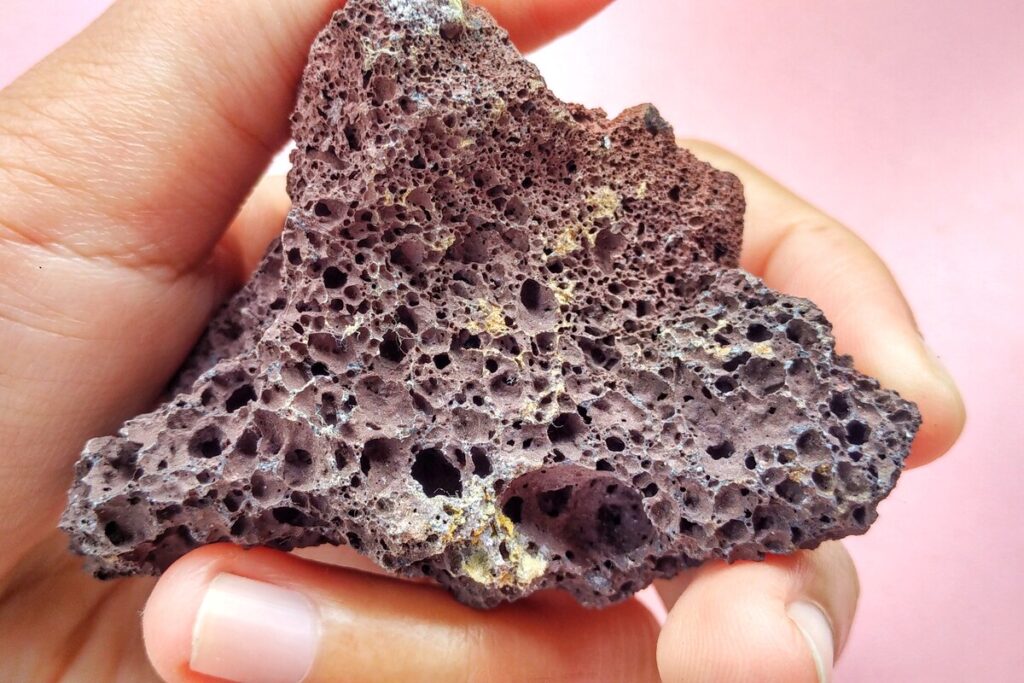
Dark, fist-sized rocks on the Pacific seafloor turn out to be apartment blocks for animals smaller than a millimeter. Researchers who opened 244 of them found 4,139 individuals, and one single rock held 245.
Rocks that take millions of years to grow
The rocks are called polymetallic nodules. They are made mostly of iron and manganese oxides, and they grow incredibly slowly, sometimes adding only a few millimeters over a million years. They sit on the ocean floor at depths of 4,000 to 6,000 meters, where the bottom is mostly soft mud. In that setting, a hard rock with cracks and hollows is unusual real estate.
A team of scientists wanted to know who lives inside these formations and how much they matter for deep-sea biodiversity.
A crowded community in the cracks
The nodules came from the Clarion-Clipperton Zone, a huge stretch of the central Pacific. The team gathered them with box corers, which lift up chunks of seafloor, and with remotely operated diving robots. Back in the lab, they carefully opened each rock and pulled out the animals hiding in its crevices.
Across 244 nodules, they counted 4,139 animals, an average of 17 per rock. The most crowded nodule sheltered 245. Deep-sea ecologist Dr. Tanja Stratmann, one of the study’s three lead authors, said the cracks are big enough to house animals under a millimeter in size: “In our study we show that the sizes of cracks inside the nodules are large enough to provide home to animals that are smaller than a millimeter in size.”
Dr. Coral Diaz-Recio Lorenzo described the crevices as small shelters and said they hold animals that the team does not find in the soft sediment around them.
A different crowd from the mud next door
The nodules held fewer animals than the muddy sediment nearby. Roundworms (nematodes) inside the rocks added up to roughly 10 percent of the number in the sediment, and tiny crustaceans called copepods to about 25 percent.
The bigger surprise was who lived where. Genetic analysis showed that the nodule animals formed their own distinctive communities. Those communities looked alike even at sites up to 1,000 km apart, yet they were clearly different from the animals in the surrounding mud. That suggests the nodules offer a specialized habitat that other parts of the deep sea cannot easily replace.
One example is a single-celled organism called Thurammina sp. 1, which turned up especially often inside the nodules and seems well suited to life in the sheltered spaces.
Why deep-sea mining is part of the story
Nodules contain nickel, cobalt and copper, and companies are interested in collecting them straight from the seafloor. Taking the rocks would also take the tiny habitats inside them, along with their residents. Because a nodule needs millions of years to form, new ones would not appear within a human lifetime.
Prof. Sabine Gollner issued a warning about the stakes: “Our findings point out that commercial mining may result in an irreversible loss of undescribed and unique biodiversity associated to nodules. This needs to be considered in environmental management of deep-sea mining.”
What scientists still need to find out
A key question is still open. Researchers do not yet know whether the animals that depend on nodules also live elsewhere in the ocean. If some of them live only inside these rocks, removing the nodules could push them toward extinction. Answering that will help show which areas need protection.
Stratmann is currently taking part in an international expedition to the Clarion-Clipperton Zone to keep studying life tied to the nodules. The follow-up work is funded independently through the JPIOcean projects MiningImpact 2 and 3.
The takeaway is simple. Conservation is not only about big, visible animals. Even one ordinary-looking rock on the deep seafloor can hold a complex community, and scientists are racing to understand it before such habitats are lost.
Source: ScienceDaily