A forest tree dropping a huge crop of acorns seems unrelated to tick bites, yet a 35-year study in New York suggests the two are linked. Heavy acorn years can help predict a jump in young ticks two years later, with white-footed mice as the go-between.
Lyme disease is the most commonly reported tick-borne illness in the United States, with nearly 500,000 people diagnosed each year. It is caused by the bacterium Borrelia burgdorferi, which usually reaches people through the bite of an infected blacklegged tick. Researchers at the Cary Institute of Ecosystem Studies in Millbrook, New York, have spent decades asking what makes tick numbers rise and fall.
Three decades of watching a forest
Since 1991, the team has tracked ticks, mice, oak trees, predators and weather on a 2,000-acre forested research property in Dutchess County. A new paper in Proceedings of the National Academy of Sciences gathers nine of the project’s most surprising findings in one place.
Lead author Richard Ostfeld, a disease ecologist who runs the program with Shannon LaDeau, said the long record lets scientists tell real patterns from flukes. “On balance, these surprises have enriched our knowledge of this system, helping us to inform management of tick-borne disease risk,” he said.
Deer matter less than expected
When Lyme disease first drew attention in the 1980s, white-tailed deer were the main suspects. Hunters often saw deer covered in adult ticks. Deer cannot give the Lyme bacterium to ticks, but they do supply blood meals for adult females, so more deer seemed likely to mean more young ticks.
The full data set tells a different story. The researchers found no statistically significant link between deer numbers and the number of nymphs, the immature ticks that cause much of the Lyme disease spread to people. Short stretches of the record had hinted at a weak connection, but it faded as more years were added.
Mice are a better warning sign
Mouse numbers turned out to be a far better clue. After a year with an especially large mouse population, the study found about 40% more nymphs the following year.
White-footed mice are great meals for tick larvae and very good at passing the bacterium on to the ticks that feed on them. A larva that picks up the germ can keep it as it grows into a nymph, and that nymph can later pass it to a person.
How acorns fit in
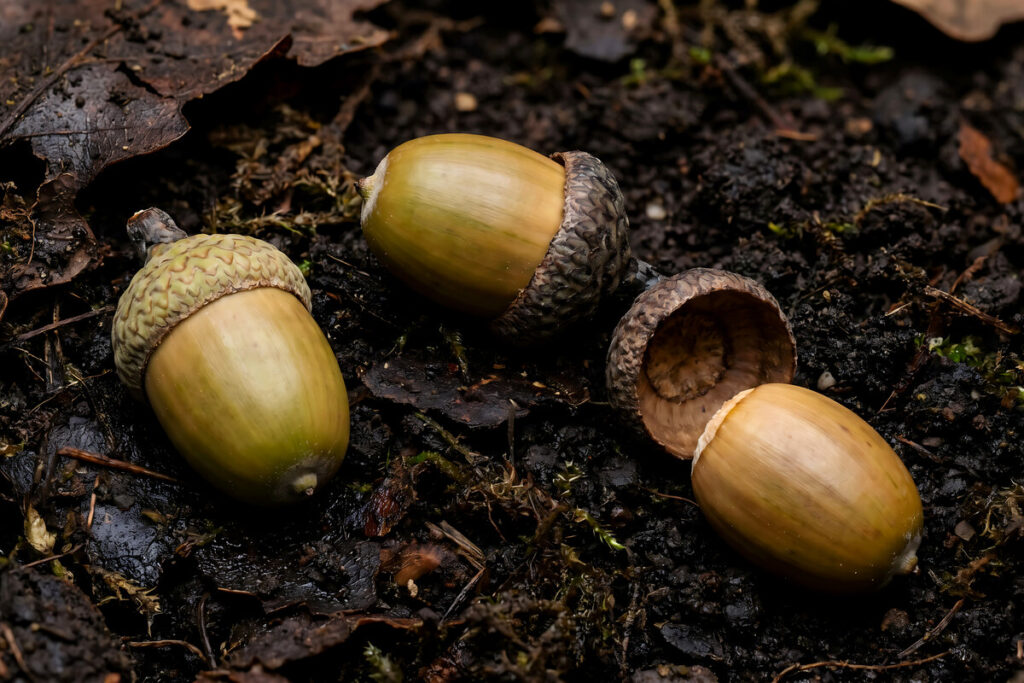
Oak trees sometimes produce giant acorn crops all at once, a pattern called masting. All that food helps forest rodents, and mouse numbers climb the next year. More mice then feed more young ticks.
A heavy acorn crop can reliably predict more nymphal ticks two years later. It is a chain of events that starts with the life cycle of a tree and ends with the risk of a tick bite.
More mice do not always mean more infected ticks
You might expect a mouse boom to raise both the number of nymphs and the share of them carrying the bacterium. At first the data seemed to agree, but the link vanished as years of records piled up. “It kept me up at night,” Ostfeld said, “because it meant that my understanding of how the system works was incomplete or wrong.”
The likely reason is the rest of the forest crowd. Skunks, squirrels and opossums also feed ticks, but they are much worse at passing on the Lyme bacterium. When those animals are common, more larvae may feed on hosts that will not infect them, which can lower the share of infected nymphs even in a big mouse year. In Ostfeld’s words, “the infection prevalence in the nymphs really depends on how all the larval tick meals are distributed across all the hosts.”
Ticks handle weather better than lab tests suggested
Earlier lab work suggested that intense heat or hard cold could kill blacklegged ticks. Out in the woods, they survive these extremes surprisingly well. The researchers think ticks retreat into deeper soil or under fallen leaves, where conditions are milder than at the surface.
Temperature still matters, though. Warmer years tended to be followed by fewer nymphs than usual. At the same time, warmth generally helps mice, which can push tick numbers up. These opposing effects make it hard to say how a changing climate will shift Lyme disease risk.
What this means for people
The takeaway is that Lyme risk comes from a web of animals, plants and weather that is complicated but not impossible to predict. Counting mice or tracking acorn crops could give public health officials an early warning of years with more tick exposure.
Big questions remain, especially about how climate change will affect ticks, their hosts and the oaks that feed the rodents. “You would expect that a warming climate, which makes life better for the mice, would eventually make life better for the ticks, but we have not seen that so far,” Ostfeld said. The team plans to keep watching the forest as the climate, the surrounding landscape and the arrival of invasive species continue to change it.
Source: ScienceDaily