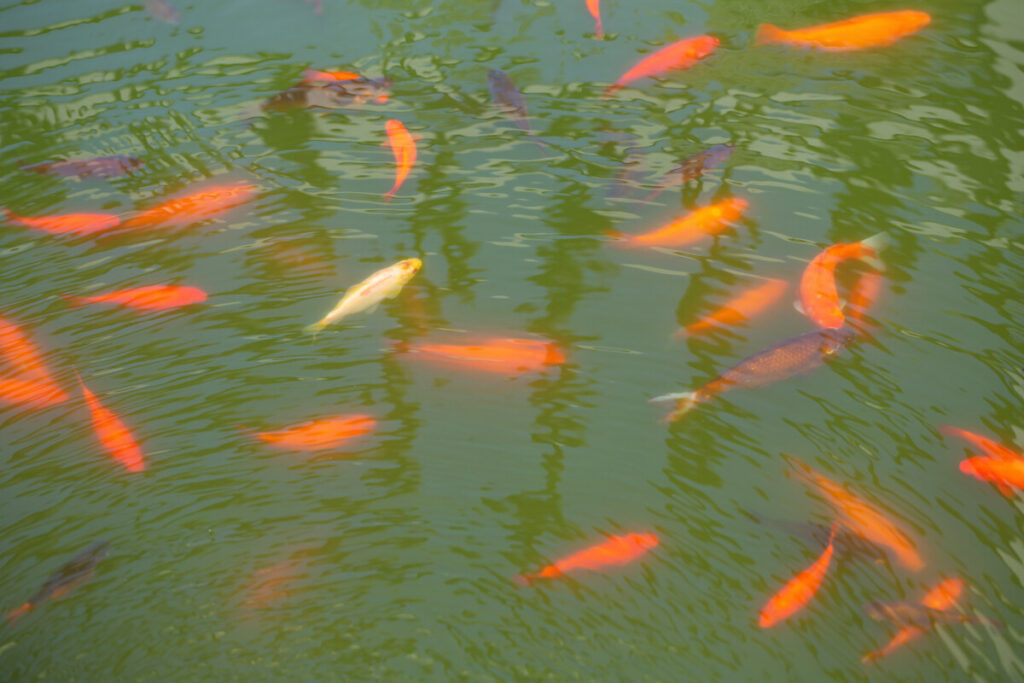
A pet goldfish set free in a pond can look like a happy ending. A new study suggests it can be the start of real trouble: goldfish released into the wild can cloud the water, upset the food web and leave native fish worse off.
The research comes from scientists at The University of Toledo and the University of Missouri, and it was published in the Journal of Animal Ecology. The team says it offers some of the strongest experimental evidence so far that invasive goldfish can change lakes in a big way.
Testing goldfish in make-believe lakes
Instead of waiting to see what goldfish do in real lakes, the researchers built their own. They used large outdoor freshwater tanks called mesocosms, which are designed to copy real lake conditions as closely as possible. Then they added goldfish (Carassius auratus) and watched how things changed over time.
They set up two kinds of water that are common in nature. Some tanks held nutrient-poor water, which scientists call oligotrophic. Others held nutrient-rich water, called eutrophic. In both kinds of water, the goldfish caused major disruption.
To measure that damage, the team kept an eye on a long list of things: water quality, the tiny floating algae known as phytoplankton, small invertebrate animals, stringy filamentous algae and the overall condition of the native fish.
Is it the goldfish, or just more fish?
Adding any fish to a lake changes things, so the team had to rule out a simple explanation. Maybe the harm came from having more fish in the water overall, not from goldfish in particular. To pull those two effects apart, they used two kinds of experiments. In one, goldfish were added on top of the fish already there. In the other, goldfish took the place of some of them.
The results were telling. Some changes to the underwater plants did follow the total number of fish. But the most severe damage was tied directly to the presence of goldfish.
When a lake flips
The study also documented what ecologists call a regime shift. That is the moment an ecosystem crosses a threshold and quickly reorganizes into a very different state, often a degraded one. Picture a lake that does not slowly slide downhill but suddenly flips into a worse condition.
Once that happens, there is no easy way back. The researchers note that restoring an ecosystem after a regime shift can be extremely difficult and expensive.
Why a little fish becomes a big problem
A goldfish in a bowl seems harmless. Out in the wild, the story changes.
“If goldfish are released into the wild, they rapidly grow into very large fish that stir up lake sediments, consume large numbers of prey and compete with native fish,” said co-author Rick Relyea, a professor in the University of Missouri College of Agriculture, Food and Natural Resources and director of Mizzou’s Johnny Morris Institute of Fisheries, Wetlands and Aquatic Systems.
Goldfish are among the most widely kept ornamental fish in the world, and the global pet trade now moves aquatic animals between continents on an unprecedented scale. Goldfish reach the wild when people release them into ponds, rivers or lakes, or when they escape during floods. Once there, they can settle in, form invasive populations and spread quickly.
Why it matters for pet owners
Lead investigator William Hintz, an associate professor in the Department of Environmental Sciences and Lake Erie Center at The University of Toledo, wants the message to reach people at home. “It is critically important to inform the public that their pets can become pests that will harm freshwater ecosystems,” he said.
He also recognized the good intentions behind most releases. Setting a goldfish free, he said, “might be seen as an act of kindness, but it can turn into a major ecological threat.”
The researchers argue that goldfish should be treated as a high-priority invasive species. They want natural resource agencies to focus on prevention, early detection and control before wild populations take hold. They also call for stronger public education, so that owners understand what happens when aquarium animals end up in natural waterways.
What to do with a goldfish you can no longer keep
If you no longer want your goldfish, the message from this study is simple: do not let it go in a pond, river or lake. The researchers point to a few better options:
- Return the fish to a pet store.
- Find another aquarium owner who is willing to adopt it.
- Contact your local wildlife authorities for guidance.
A goldfish may be one of the smallest pets in the house, but in the wrong place it can help change a whole lake. Keeping it out of the wild protects the native fish, plants and tiny creatures that already call that water home.
Source: ScienceDaily